Next window today· 7:00–19:00 · favorable · sunset 18:05
Tap a factor for its source and model point · Forecast 27°C · seasonal avg 27°C ( · Forecast 80°F · seasonal avg 80°F)
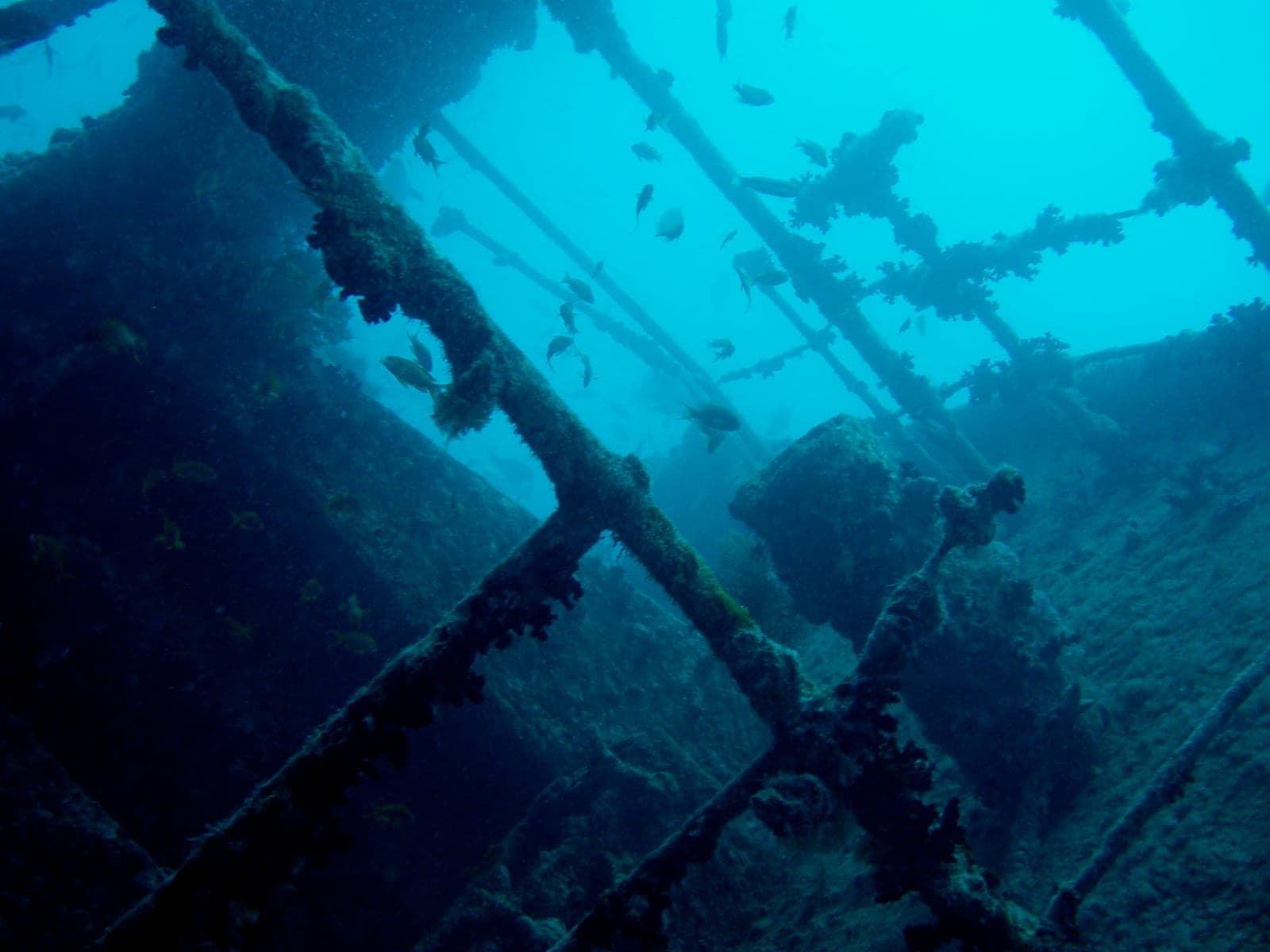
Site hazards: Strong current - exposed to directional winds and currents, especially in the first 15 m. Depth - seabed at roughly 30-33 m. Silt and variable visibility - can reduce visibility on the wreck. Overhead cargo-hold penetration - operators run a separate penetration dive into the holds. Unstable structure - the wreck is deteriorating and damaged by boat moorings.
Read the full hazards ↓Dive windows this week
Lightest wind: Mon0.2 m waves · 9 kn wind (0.6 ft waves · 9 kn wind)
0.2 m waves · 10 kn wind (0.7 ft waves · 10 kn wind)
0.3 m waves · 15 kn wind (1.0 ft waves · 15 kn wind)
0.3 m waves · 14 kn wind (0.9 ft waves · 14 kn wind)
0.5 m waves · 16 kn wind (1.7 ft waves · 16 kn wind)
0.3 m waves · 10 kn wind (1.0 ft waves · 10 kn wind)
Favorable windowModerate window— no window
Every forecast dive window each day, site-local time, from wave and wind forecasts. Numbers under each bar are daylight averages.
First light 6:27 · Sunrise 6:51 · Sunset 18:05 · some windows run past sunset
Source: Open-Meteo marine · model point 5.1 km from site · updated 25 Oct, 20:25 EEST
Forecast only — always assess conditions on site.