Skip to content
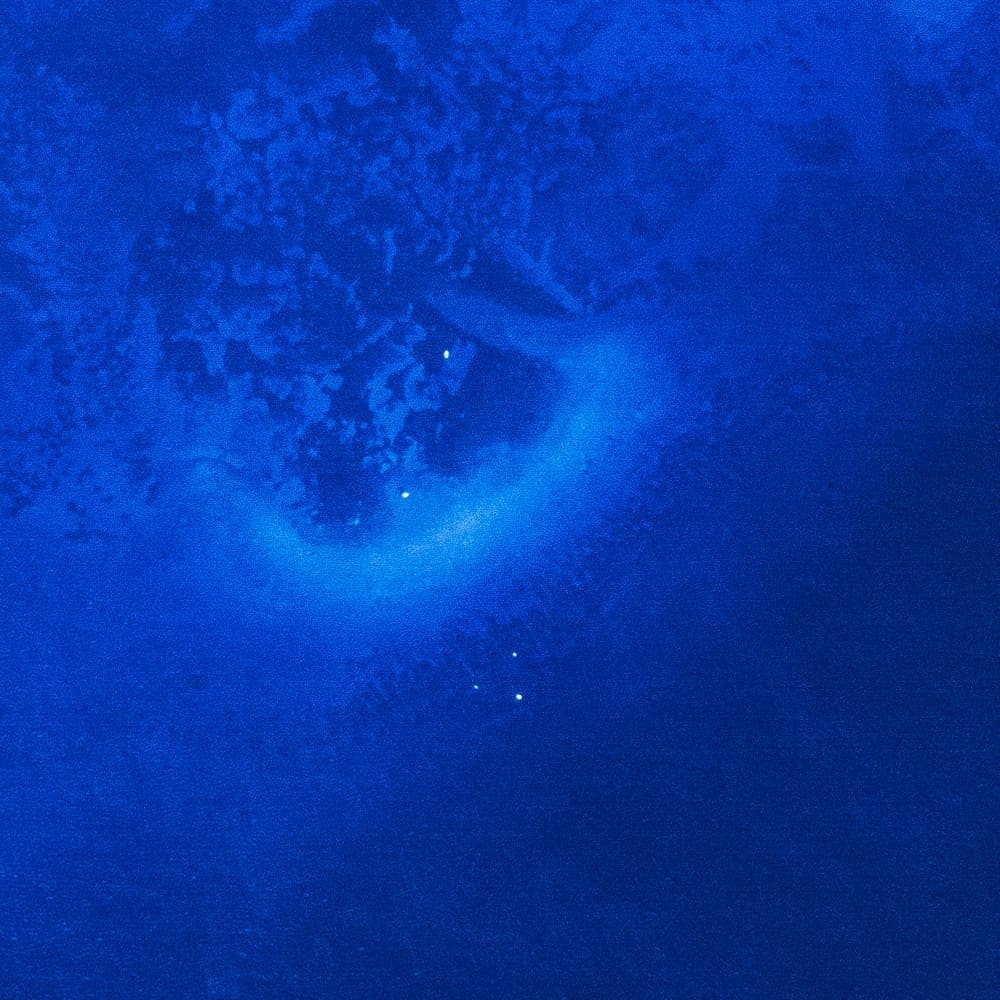
Molasses Reef United States — Photo: USGS | License: Public domain | Source: https://upload.wikimedia.org/wikipedia/commons/b/ba/Molasses_Reef_NC1NHAP840303117.jpg
IntermediateBoat entry

Molasses Reef

Florida, United States
Open Water suggestedCurrent along the outer reef edge (stronger at the south end), heavy charter boat traffic, shallow coral heads, fire coral. Sanctuary Preservation Area2–27 m (6–90 ft) depthBoat entryRash guard or 2mm shorty typical

Boat dive — see Entry & access.

Molasses Reef at a glance

Molasses Reef is an intermediate boat dive site in Florida, United States with depths of 1.8–27.4 m (6–90 ft). Typically most favorable Jul · from 3 years of archive data. Divers commonly see Queen angelfish, Horse-eye jack, and Southern stingray. Recent reports put the water around 28°C (83°F). Check the latest conditions and entry details before you go.

Moderate window now· until 19:00 · sunset 18:45

Forecast for this hour · 10:00 · run 21 h ago
1.8 m (6.0 ft)waves — about two meters expected (waves — about six feet expected)

Tap a factor for its source and model point · Forecast 28°C · seasonal avg 28°C ( · Forecast 83°F · seasonal avg 83°F)

Site hazards: Current along the outer reef edge (stronger at the south end), heavy charter boat traffic, shallow coral heads, fire coral. Sanctuary Preservation Area

Read the full hazards ↓

Dive windows this week

Lightest wind: Fri
Mon8:00–19:00 moderate

2.0 m waves · 20 kn wind (6.6 ft waves · 20 kn wind)

Tue8:00–10:00 favorable, 10:00–19:00 moderate

2.0 m waves · 20 kn wind (6.5 ft waves · 20 kn wind)

Wed8:00–19:00 favorable

0.9 m waves · 19 kn wind (3.0 ft waves · 19 kn wind)

Thu8:00–19:00 favorable

0.6 m waves · 10 kn wind (2.0 ft waves · 10 kn wind)

Fri8:00–19:00 favorable

0.4 m waves · 8 kn wind (1.2 ft waves · 8 kn wind)

Sat8:00–19:00 favorable

0.6 m waves · 11 kn wind (1.8 ft waves · 11 kn wind)

SunNot in the forecast yet

Favorable windowModerate window— no window

Every forecast dive window each day, site-local time, from wave and wind forecasts. Numbers under each bar are daylight averages.

First light 7:02 · Sunrise 7:25 · Sunset 18:45 · some windows run past sunset

Source: Open-Meteo marine · model point 2.4 km from site · updated 25 Oct, 13:19 GMT-4

Forecast only — always assess conditions on site.

Compare this weekend’s windows near Molasses Reef

Recent diver reports

Dated firsthand observations from divers — not current conditions.

No diver reports for this site yet. — one dated observation helps every diver after you.

Dived here today — did the forecast match?

What Divers Say

Known for: Queen angelfish, Horse-eye jack, Southern stingray
Best time: Year-round; flattest seas and 60-100 ft visibility most reliable May-September. Winter fronts can blow out the site for days.

Based on community reviews and site data. Conditions vary — always verify before diving.

Best months, historically

What conditions have historically been typical at this site, month by month — not a forecast.

  1. January, 85% of days have historically been favorable, water has typically been 23°C (73°F), waves have typically been 0.7 m (2.4 ft), wind has typically been 16 knots
  2. February, 88% of days have historically been favorable, water has typically been 24°C (75°F), waves have typically been 0.7 m (2.4 ft), wind has typically been 15 knots
  3. March, 86% of days have historically been favorable, water has typically been 25°C (78°F), waves have typically been 0.8 m (2.5 ft), wind has typically been 16 knots
  4. April, 83% of days have historically been favorable, water has typically been 26°C (79°F), waves have typically been 0.8 m (2.7 ft), wind has typically been 16 knots
  5. May, 98% of days have historically been favorable, water has typically been 29°C (84°F), waves have typically been 0.6 m (1.8 ft), wind has typically been 13 knots
  6. June, 98% of days have historically been favorable, water has typically been 30°C (86°F), waves have typically been 0.6 m (2.0 ft), wind has typically been 14 knots
  7. July, 99% of days have historically been favorable, water has typically been 31°C (88°F), waves have typically been 0.5 m (1.7 ft), wind has typically been 12 knots, historically most favorable
  8. August, 96% of days have historically been favorable, water has typically been 31°C (89°F), waves have typically been 0.6 m (1.8 ft), wind has typically been 13 knots
  9. September, 97% of days have historically been favorable, water has typically been 31°C (87°F), waves have typically been 0.5 m (1.7 ft), wind has typically been 12 knots
  10. October, 76% of days have historically been favorable, water has typically been 28°C (83°F), waves have typically been 0.8 m (2.6 ft), wind has typically been 17 knots
  11. November, 77% of days have historically been favorable, water has typically been 26°C (79°F), waves have typically been 0.8 m (2.7 ft), wind has typically been 16 knots
  12. December, 71% of days have historically been favorable, water has typically been 24°C (75°F), waves have typically been 0.9 m (2.8 ft), wind has typically been 17 knots

July has typically had the largest share of favorable days here. Conditions vary year to year — this is historical context, not a forecast.

Based on 3 years of archive data. Bar height shows the share of days each month whose conditions have historically scored favorably.

Marine life seen at this site

Species noted at this site — not a promise of what you’ll encounter.

Species seen here

Rough labels: “Commonly seen” usually means two or more recorded sightings near this site in public dive logs (GBIF), “Occasionally seen” one; “Seasonal” and “Rarely seen” come from dive-guide research. Not a measured rate.

The underwater calendar

When these animals are most recorded around Gulf of Mexico — from open sighting data, not a promise.

Watch the whole year animate on the Migrations map

Fills & rentals nearby

Facts from OpenStreetMap, corrected by the community — listed by distance only. Details change; confirm with the shop.

Shop facts come from OpenStreetMap and community corrections, shown nearest first. PickADive lists facts and contacts only — no listing is sponsored or ranked.

Featured Florida Keys reef guide

Molasses Reef is a practical Key Largo reef guide for divers who want more than a famous name. Use this guide for reef character, boat access, sanctuary rules, condition checks, and practical FAQs.

PickADive guides and forecast windows are planning context, not a safety clearance. Confirm current conditions, rules, training limits, and operator guidance before diving — the decision is yours.

Planning focus
Key Largo reef routes
Compare reef and wreck options before booking.
Access
Boat dive
Best for
Florida Keys reef
Planning note
Sanctuary rules matter
Difficulty
Intermediate
Suggested context: Open Water
Depth
1.8-27.4m
Confirm your plan against current conditions and training.

Why dive Molasses Reef

Molasses Reef is useful for divers who already know the reef name and want practical details: depth range, operator logistics, reef protection, weather sensitivity, and nearby alternatives.

How to dive it

Plan Molasses Reef as a boat dive in the Florida Keys. Confirm mooring, current, visibility, depth, group size, reef-protection rules, and whether the trip is intended for scuba, snorkel, or mixed groups. Use the PickADive forecast only as planning context, then verify with local operators.

Marine life and site character

Divers usually research Molasses Reef for classic Florida Keys reef scenery: coral structure, reef fish, turtles, rays, barracuda, nurse sharks, and the broader sanctuary ecosystem. Treat marine life as conditions-dependent and avoid touching, chasing, feeding, or standing on reef structure.

Best season and conditions

Key Largo can be active year-round, but individual reef days depend on wind, sea state, current, visibility, temperature, and operator judgment. For a first visit, prioritize calm conditions and a simple profile over trying to force the exact reef on a marginal day.

Hazards and diver readiness

Boat traffic, current, fragile coral, limited mooring availability, variable visibility, and mixed snorkel/scuba traffic are the main concerns. Follow sanctuary rules and operator instructions closely.

Local tips

Compare Molasses Reef with nearby Key Largo reefs and wrecks before committing. If wind or current makes the reef less favorable, a local operator may choose a better-protected site.

Common questions about Molasses Reef

Is Molasses Reef a beginner dive?

It can be appropriate for newer divers on calm days with a conservative operator plan, but current, boat traffic, and reef protection still require good buoyancy and supervision.

Is Molasses Reef a shore dive?

No. Treat Molasses Reef as a boat dive from the Key Largo area. Confirm the operator route, mooring plan, and weather call before the trip.

What should I check before diving Molasses Reef?

Check wind, wave height, current, visibility, water temperature, operator schedule, sanctuary rules, and whether the boat is carrying scuba divers, snorkelers, or both.

Why compare Molasses Reef with other Key Largo sites?

Key Largo has many reef and wreck options. Comparing Molasses Reef with nearby sites helps divers choose a route that fits the day, boat plan, conditions, and experience level.

Data updated June 2026

Site details

Molasses Reef is one of the most heavily dived spur-and-groove coral reefs in the world, sitting at the seaward edge of the Florida Keys National Marine Sanctuary off Key Largo. Marked by its iconic light tower, the reef offers more than 30 mooring-buoyed sites from 6-ft snorkel gardens to 90-ft outer ledges, with named features like Hole in the Wall, Winch Hole and the Aquarium. Mild current along the outer edge makes for easy drift dives, and fish life is exceptional thanks to decades of no-take protection.

boatdriftreef

Current along the outer reef edge (stronger at the south end), heavy charter boat traffic, shallow coral heads, fire coral. Sanctuary Preservation Area — no fishing, no touching or standing on coral, mooring buoy use required.


Reviews

No reviews yet — this site is waiting for its first. Dived here? Your rating and a few lines help the next diver.


Spot something off?

Help keep this listing accurate for the next diver.