Skip to content
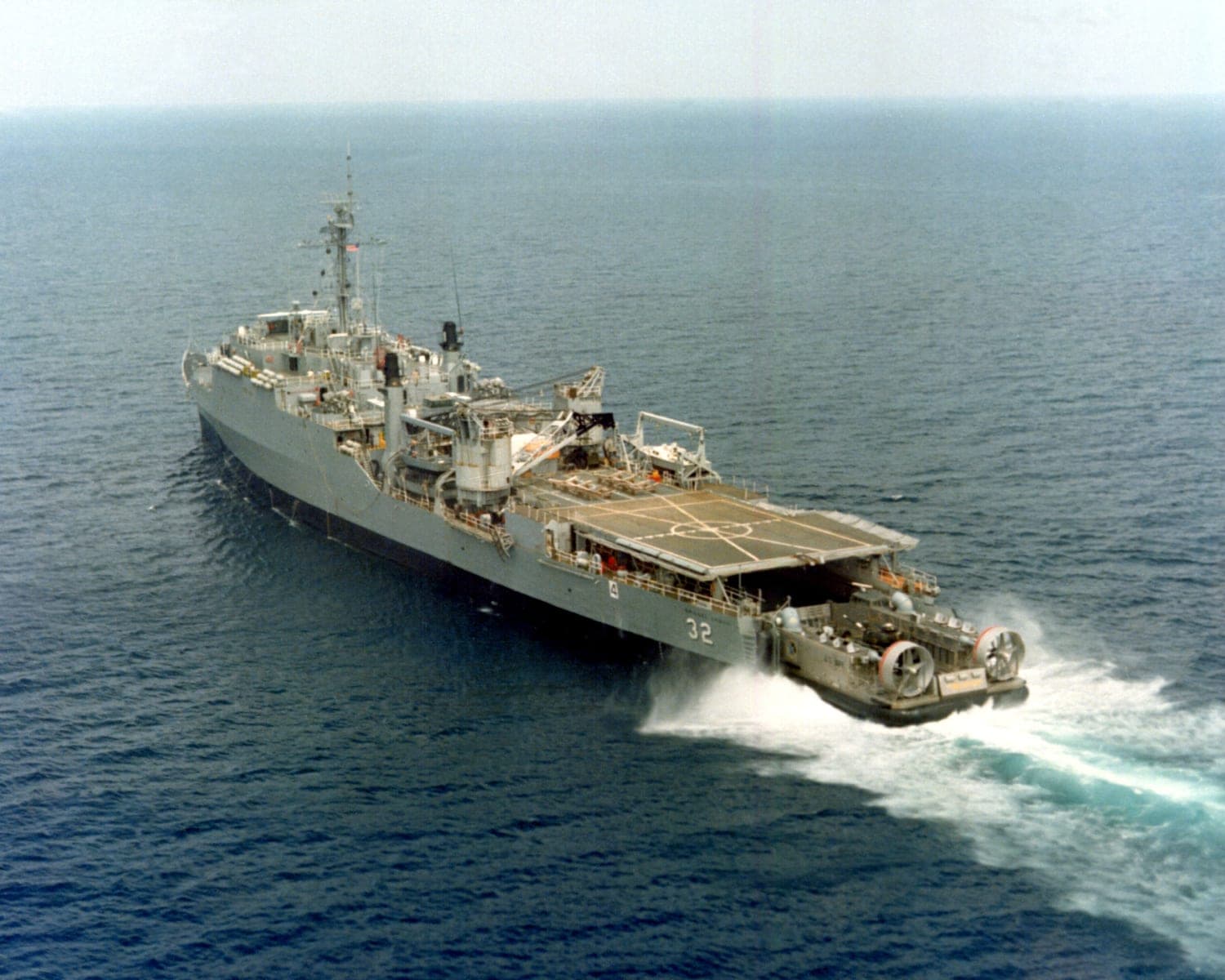
Spiegel Grove United States — Photo: U.S. Navy; User Durin on en.wikipedia | License: Public domain | Source: https://upload.wikimedia.org/wikipedia/commons/0/00/USS_Spiegel_Grove_LSD-32.jpg
AdvancedBoat entry

Spiegel Grove

Florida, United States
AOW suggestedDepth (deck ~65 ft, sand at ~130 ft), strong and unpredictable Gulf Stream currents on the mooring lines, overhead environment20–40 m depthBoat entryRash guard or 2mm shorty typical

Boat dive — see Entry & access.

Spiegel Grove at a glance

Spiegel Grove is an advanced boat dive site in Florida, United States with depths of 19.8–39.6 m (65–130 ft). Typically most favorable Jul · from 3 years of archive data. Divers commonly see Goliath grouper, Midnight parrotfish, and Great barracuda. Recent reports put the water around 31°C (88°F). Check the latest conditions and entry details before you go.

Marine model · graded 12h ago
0.7 mwaves — under a meter expected

Tap a factor for its source and model point · Forecast 31°C · seasonal avg 31°C

Site hazards: Depth (deck ~65 ft, sand at ~130 ft), strong and unpredictable Gulf Stream currents on the mooring lines, overhead environment

Read the full hazards ↓

Dive windows this week

Best: Mon
Fri8:00–20:00
Sat8:00–20:00
Sun8:00–20:00
Mon8:00–20:00
Tue8:00–20:00
Wed8:00–20:00
Thu

Favorable windowModerate window— no window

First light 6:42 · Sunrise 7:05 · Sunset 19:29

Source: Open-Meteo marine · model point 6.8 km from site · graded 12h ago

Forecast only — always assess conditions on site.

Recent diver reports

Dated firsthand observations from divers — not current conditions.

No diver reports for this site yet. — one dated observation helps every diver after you.

Dived here today — did the forecast match?

What Divers Say

Known for: Goliath grouper, Midnight parrotfish, Great barracuda
Best time: Year-round when current and seas allow; summer brings the calmest conditions and 60-100 ft visibility. Always confirm current strength with the charter before splashing.

Based on community reviews and site data. Conditions vary — always verify before diving.

Best months, historically

What conditions have historically been typical at this site, month by month — not a forecast.

  1. Jan85%23°C0.7 m
  2. Feb88%24°C0.7 m
  3. Mar86%25°C0.8 m
  4. Apr83%26°C0.8 m
  5. May98%29°C0.6 m
  6. Jun98%30°C0.6 m
  7. Jul99%31°C0.5 m
  8. Aug96%31°C0.6 m
  9. Sep97%31°C0.5 m
  10. Oct76%28°C0.8 m
  11. Nov77%26°C0.8 m
  12. Dec71%24°C0.8 m

July hastypically had the largest share of favorable days here. Conditions vary year to year — this is historical context, not a forecast.

Based on 3 years of archive data. Bar height shows the share of days each month whose conditions have historically scored favorably.

Marine life recorded at this site, by month

Recorded observations — evidence of past sightings, not a promise of what you’ll encounter.

  • Sphyraena barracuda recorded here Jun, Oct–Dec (5 records)

    most recent 2015

  • Abudefduf saxatilis recorded here Jun, Nov (3 records)

    most recent 2015

  • Caranx ruber recorded here Jun (3 records)

    most recent 2015

  • Bodianus rufus recorded here Jun (2 records)

    most recent 2015

  • Chromis multilineata recorded here Jun (2 records)

    most recent 2015

  • Holacanthus tricolor recorded here Jun (2 records)

    most recent 2015

  • Lachnolaimus maximus recorded here Jun (2 records)

    most recent 2015

  • Mycteroperca bonaci recorded here Jun (2 records)

    most recent 2015

Counts are occurrence records near this site from public biodiversity datasets (GBIF), grouped by calendar month across all sampled years. Sightings vary — past records are context, not a prediction.

The underwater calendar

When these animals are most recorded around Gulf of Mexico — from open sighting data, not a promise.

Watch the whole year animate on the Migrations map

Fills & rentals nearby

Facts from OpenStreetMap, corrected by the community — listed by distance only. Details change; confirm with the shop.

Shop facts come from OpenStreetMap and community corrections, shown nearest first. PickADive lists facts and contacts only — no listing is sponsored or ranked.

Featured Key Largo wreck guide

Spiegel Grove is a practical Key Largo wreck guide for divers researching a large artificial reef. It gives the context that matters: wreck layout, depth, current, penetration risk, operator expectations, and conservative planning language.

PickADive guides and forecast windows are planning context, not a safety clearance. Confirm current conditions, rules, training limits, and operator guidance before diving — the decision is yours.

Planning focus
Key Largo wreck route
Access
Boat dive
Best for
Large artificial reef wreck
Planning note
Penetration requires training
Difficulty
Advanced
Suggested context: Advanced Open Water Minimum; Wreck/technical Certification (Tec/trimix Or Rebreather Training) For Any Penetration
Depth
19.8-39.6m
Confirm your plan against current conditions and training.

Why dive Spiegel Grove

Spiegel Grove deserves a deeper guide because a large wreck is different from a shallow reef tour. The page connects divers to real site details while making clear how depth, current, route choice, and training affect the plan.

How to dive it

Plan Spiegel Grove as a boat-access wreck dive with a Key Largo operator. Ask about current, mooring line procedures, maximum depth, exterior-only versus penetration routes, certification expectations, gas planning, and what alternative sites are used if conditions change.

Marine life and site character

The wreck functions as an artificial reef, so divers may see reef fish, schooling fish, barracuda, turtles, rays, and other Florida Keys life around the structure. The main reason to choose the site is the combination of wreck scale, conditions, and appropriate training.

Best season and conditions

The best day is the one with suitable sea state, current, visibility, and operator confidence. Because the wreck is large and deeper than many reef dives, small changes in current or visibility can change the experience significantly.

Hazards and diver readiness

Depth, current, overhead spaces, silt, disorientation, entanglement, boat traffic, and task loading are the main concerns. Wreck penetration should be limited to divers with appropriate training, equipment, and guide/operator planning.

Local tips

If you are building a Key Largo trip, compare Spiegel Grove with Molasses Reef and other nearby sites. Pairing an advanced wreck day with easier reef days can create a better trip than forcing every famous site into one schedule.

Common questions about Spiegel Grove

Is Spiegel Grove an advanced dive?

Treat it as an advanced wreck objective unless your operator gives a conservative route that fits your certification and experience. Depth, current, and wreck complexity matter.

Can I penetrate the Spiegel Grove wreck?

Only divers with proper wreck training, equipment, and a clear operator plan should enter overhead spaces. Many divers can enjoy the exterior without penetration.

Is Spiegel Grove near Key Largo?

Yes. Spiegel Grove is commonly planned from the Key Largo area by boat. Confirm departure point, travel time, current, and mooring procedures with the operator.

Why does PickADive include safety disclaimers on this page?

A forecast or guide cannot clear a wreck dive for safety. PickADive helps with research, but the final decision depends on local conditions, training, equipment, and operator judgment.

Data updated June 2026

Site details

The USS Spiegel Grove, a 510-ft Navy landing ship dock scuttled in 2002 six miles off Key Largo, is one of the largest artificial reefs in the world. She rests upright in 130 ft of water with her superstructure starting around 60-65 ft, serviced by seven permanent mooring buoys inside the Florida Keys National Marine Sanctuary. Strong currents and sheer scale make it a genuine advanced dive, while the labyrinthine interior is a renowned technical/wreck-penetration playground; goliath grouper, jacks and bull sharks patrol the structure.

boatwreck

Depth (deck ~65 ft, sand at ~130 ft), strong and unpredictable Gulf Stream currents on the mooring lines, overhead environmentextensive penetration possible only with wreck/technical training and lights/reels, narcosis at depth, boat traffic. Multiple diver fatalities have occurred inside the wreck.


Reviews

No reviews yet — this site is waiting for its first. Dived here? Your rating and a few lines help the next diver.


Spot something off?

Help keep this listing accurate for the next diver.